Mastering Pipeline Girth Welding Techniques for Optimal Strength and Durability
Understanding Pipeline Girth Welding Techniques
The Importance of Girth Welds in Pipeline Construction
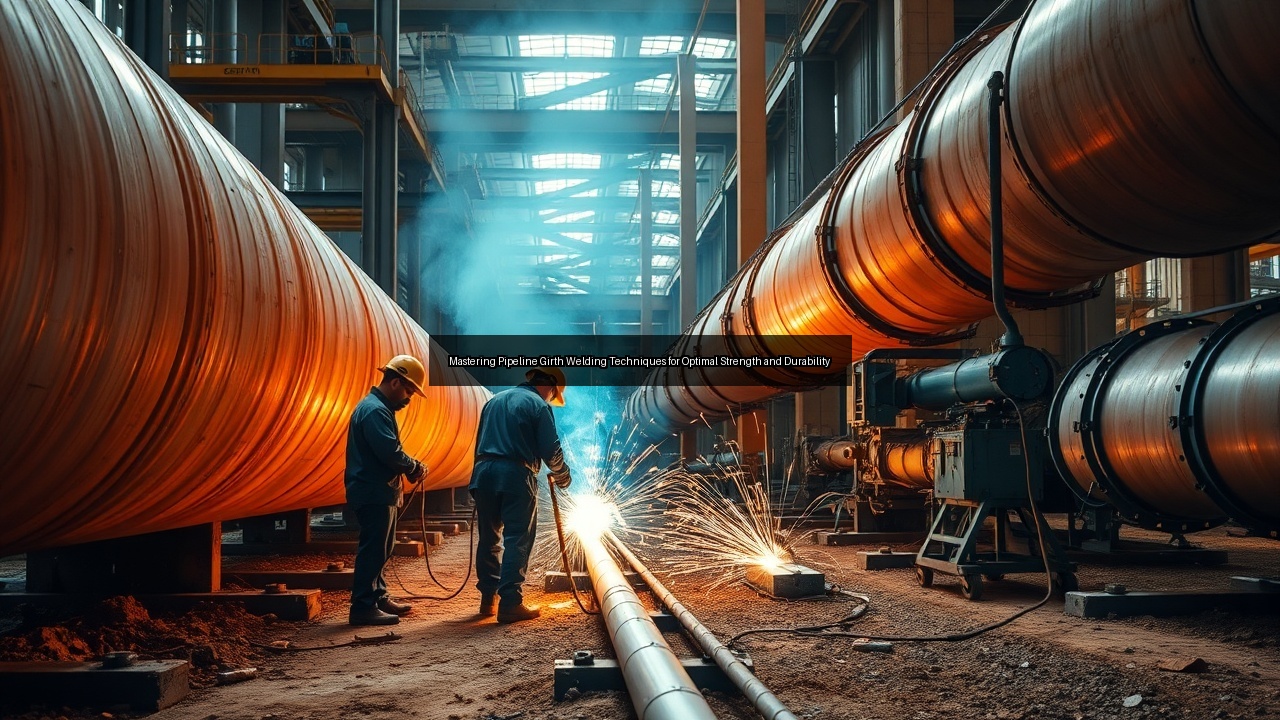
Pipeline girth welding plays a pivotal role in the construction and integrity of pipelines. Girth welds connect individual pipe sections, creating a continuous structure capable of withstanding internal pressures and external stresses. The quality of these welds directly impacts the overall strength and durability of the pipeline. Inadequate girth welds can lead to leaks, failures, and costly repairs, emphasizing the critical nature of mastering welding techniques. A well-executed girth weld ensures the pipeline maintains its shape and functionality over time, making it essential for transporting various materials, including oil, gas, and water.
Overview of Welding Methods for Girth Joints
Several welding methods are employed for girth joints, each offering unique advantages. Shielded Metal Arc Welding (SMAW), Gas Tungsten Arc Welding (GTAW), and Gas Metal Arc Welding (GMAW) are commonly used techniques. Each method requires specific skills and equipment, influencing the choice based on project requirements. For instance, GMAW is favored for its speed and efficiency, while GTAW excels in producing high-quality welds in stainless steel pipelines. Friction stir welding has emerged as a novel technique, known for its ability to join materials without melting, thus minimizing distortion and enhancing weld integrity. Understanding these methods allows welders to select the most suitable approach for their specific pipeline construction needs.
Factors Affecting Weldability of Pipeline Materials
The weldability of pipeline materials significantly influences the success of girth welding. Several factors come into play, including the type of material, its thickness, and the presence of impurities. Stainless steel, for example, exhibits excellent corrosion resistance and strength, making it a popular choice for pipelines. However, its weldability can be affected by factors such as carbon content and microstructure. Additionally, the temperature during the welding process must be carefully controlled. Higher temperatures can lead to warping or cracking, while lower temperatures may result in poor fusion. Understanding these factors is essential for achieving high-quality girth welds that meet industry standards and performance requirements.
Welding Inspection and Quality Assurance
Types of Weld Inspection: Visual, Ultrasonic, and Friction Stir Testing
Welding inspection is a critical component of ensuring the quality and safety of girth welds. Visual inspection serves as the first line of defense, allowing welders and inspectors to identify surface defects such as cracks, porosity, or lack of fusion. However, visual inspection alone may not uncover subsurface issues. Ultrasonic testing (UT) provides a deeper analysis by using sound waves to detect internal flaws, ensuring comprehensive evaluation of the weld integrity. Friction stir testing is another innovative method that checks the quality of welds created through friction stir welding, offering insights into their mechanical properties. Employing a combination of these inspection methods helps maintain the highest quality standards in pipeline girth welding.
Non-Destructive Testing Methods for Girth Welds
Non-destructive testing (NDT) methods are essential for evaluating girth welds without causing damage. Techniques such as radiographic testing and magnetic particle testing complement visual and ultrasonic inspections, providing a holistic view of weld integrity. Radiographic testing uses X-rays or gamma rays to reveal internal defects, while magnetic particle testing identifies surface and near-surface discontinuities in ferromagnetic materials. These NDT methods are crucial for preventing failures in pipelines transporting hazardous materials, as even minor defects can lead to catastrophic consequences. Implementing a robust NDT program enhances the reliability and safety of pipeline infrastructures, ensuring compliance with industry standards and regulations.
Implementing a Robust Girth Weld Inspection Procedure
A robust girth weld inspection procedure is vital for maintaining the integrity of pipeline systems. This procedure should encompass all stages of the welding process, from pre-weld preparations through post-weld inspections. Detailed checklists and protocols define the criteria for acceptance or rejection based on established standards. Regular training for welders and inspectors ensures they are familiar with the latest techniques and technologies in weld inspection. Incorporating real-time monitoring systems can also enhance the inspection process, allowing for immediate detection of anomalies. By emphasizing a culture of quality assurance, companies can significantly reduce the risk of failure and enhance the overall reliability of their pipeline networks.
Enhancing Strength and Durability of Girth Welds
The Role of Temperature in Welding Processes
Temperature plays a crucial role in the success of girth welding processes. Maintaining the appropriate heat input is essential for achieving optimal weld penetration and fusion. Too much heat can lead to excessive grain growth, reducing the strength and toughness of the weld. Conversely, insufficient heat may result in poor fusion between the base metal and filler material. Preheating the materials before welding can mitigate these issues, especially in thicker pipes or challenging materials like high-strength steel. Post-weld heat treatment also enhances the mechanical properties of welded joints. Understanding and controlling temperature throughout the welding process is vital for producing strong, durable girth welds that withstand the test of time.
Corrosion Resistance: Selecting the Right Materials
Corrosion resistance is a critical factor when selecting materials for girth welds, especially in environments exposed to moisture, chemicals, or extreme temperatures. Stainless steel is a popular choice due to its excellent corrosion resistance and mechanical properties. However, not all stainless steels offer the same level of protection. The selection process should consider the specific environmental conditions the pipeline will face. Coatings can also enhance corrosion resistance, providing an additional layer of protection to welded joints. Understanding the interaction between materials and their environments allows engineers and welders to make informed decisions that enhance the lifespan and reliability of girth welds.
Case Studies: Successful Girth Welds in Stainless Steel Pipelines
Examining successful case studies of girth welds in stainless steel pipelines provides valuable insights into best practices and innovative techniques. One notable project involved the construction of a stainless steel pipeline for transporting corrosive chemicals. The use of advanced welding techniques, coupled with rigorous inspection protocols, resulted in a series of high-quality girth welds that exceeded performance expectations. Another case involved the application of friction stir welding to join stainless steel sections, demonstrating the method's ability to produce strong, defect-free joints. These case studies highlight the importance of selecting the right materials, employing advanced welding techniques, and implementing thorough inspection processes to achieve outstanding results in girth welding.
Best Practices for Pipeline Girth Welding
Standard Operating Procedures for Girth Welding
Establishing standard operating procedures (SOPs) for girth welding enhances consistency and quality across projects. SOPs should encompass every aspect of the welding process, including material selection, equipment calibration, welding techniques, and inspection protocols. Clear documentation helps ensure that all team members are aligned with the project goals and standards. Regular reviews and updates to these procedures keep them relevant and effective as technologies and best practices evolve. Implementing SOPs not only improves the quality of girth welds but also streamlines training for new welders, ensuring they adhere to established practices from the outset.
Training and Skills Development for Welders
Training and skills development are essential for ensuring welders are equipped to produce high-quality girth welds. Comprehensive training programs should cover various welding techniques, materials, safety protocols, and inspection methods. Hands-on practice allows welders to refine their skills and gain confidence in their abilities. Additionally, ongoing education keeps welders informed about the latest advancements in welding technology and techniques. Investing in the professional development of welders not only enhances the quality of girth welds but also fosters a culture of excellence within the organization.
Future Trends in Girth Welding Technology
The future of girth welding technology promises exciting advancements that can enhance efficiency and quality. Innovations such as automated welding systems, robotic welders, and real-time monitoring software are set to revolutionize the industry. These technologies can minimize human error, increase productivity, and provide detailed data for quality assurance. Additionally, developments in materials science are leading to the creation of stronger, lighter, and more corrosion-resistant materials that can improve the performance of girth welds. Staying abreast of these trends allows companies to adopt cutting-edge practices that enhance the durability and effectiveness of pipeline girth welding.